
What Is the Difference Between an Interior Designer, a Specifier, and a Procurement Company?
What Is the Difference Between an Interior Designer, a Specifier, and a Procurement Company?
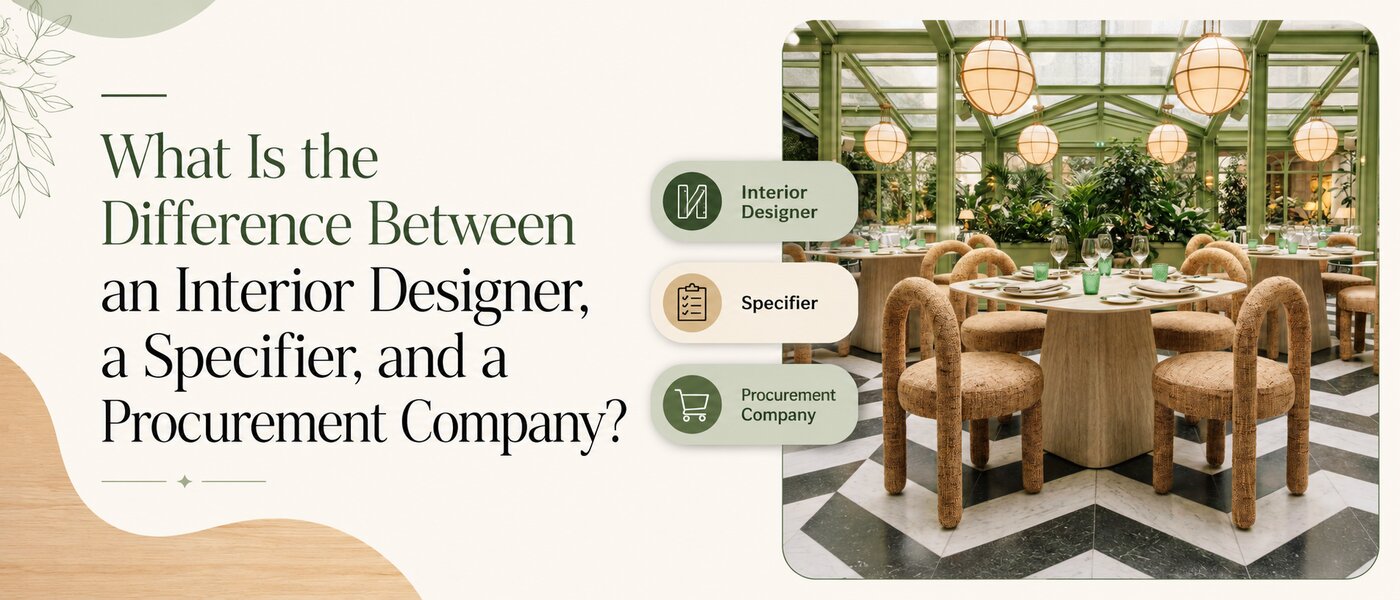
In furniture, hospitality, and commercial design, the words interior designer, specifier, and procurement company are sometimes used as if they mean the same thing. They are connected, and they often work together, but they do not have the same role.
Understanding the difference matters because each one approaches a project from a different angle. The designer shapes the vision. The specifier defines what should be used. The procurement company helps make sure it gets purchased, tracked, and delivered correctly.
For hospitality teams, developers, restaurant groups, multifamily operators, offices, senior living communities, student housing projects, and other commercial buyers, knowing these roles can make a project move more smoothly. It helps clarify who is making design decisions, who is approving product details, who is handling budgets, and who is responsible for getting furniture to the job site.
The Interior Designer: Creating the Vision
The interior designer is usually responsible for the creative and functional direction of the space. Their job is to understand the client’s goals and translate them into a real environment.
For a hotel, that might mean creating a lobby that feels welcoming, elevated, and memorable. For a restaurant, it could mean designing a dining room that supports the brand, improves flow, and makes guests want to stay longer. For a multifamily property, it might mean creating amenity spaces that help sell a lifestyle. For an office, it could mean balancing productivity, comfort, collaboration, and brand identity.
Interior designers think about the overall experience. They consider space planning, color palettes, furniture styles, lighting, materials, traffic flow, guest comfort, and visual storytelling. They may select furniture, lighting, rugs, décor, wall finishes, artwork, and accessories. They may also work with architects, contractors, owners, developers, and purchasing teams.
For furniture vendors like Zuo Modern, interior designers are often looking for products that help complete the design vision: modern lounge chairs, barstools, dining tables, outdoor seating, lighting, mirrors, or décor that match a style and work in a commercial or hospitality environment.
The Specifier: Turning the Vision Into Product Details
The specifier’s role is more technical. A specifier may be an interior designer, architect, design assistant, purchasing agent, or dedicated FF&E professional. In many projects, the designer and specifier are the same person. In larger commercial or hospitality projects, the specification role may be handled separately.
The specifier takes the design intent and turns it into detailed product instructions. They identify the exact items that should be used, including model numbers, dimensions, materials, finishes, colors, quantities, performance requirements, compliance needs, and installation notes.
For example, a designer may decide that a restaurant bar needs warm modern barstools with a walnut look and upholstered seats. The specifier would identify the exact barstool, confirm the finish, verify the height, check the seat dimensions, confirm the quantity, and make sure it works with the bar counter height and project use.
This work is important because commercial projects can involve many rooms, floors, and product categories. A hotel may need furniture for guestrooms, lobbies, pool areas, restaurants, bars, conference rooms, outdoor spaces, and back-of-house areas. The specifier helps prevent confusion by making sure everyone knows exactly what has been selected.
The Procurement Company: Making the Purchase Happen
Once products are selected and specified, someone has to buy them, track them, coordinate delivery, handle logistics, and make sure the right items arrive at the right place. That is where a procurement company comes in.
A procurement company is often responsible for the purchasing and logistics side of FF&E, which stands for furniture, fixtures, and equipment. Their role is especially important in hospitality, multifamily, senior living, student housing, restaurant groups, and large commercial projects where there may be hundreds or thousands of pieces involved.
The procurement company may request quotes, negotiate pricing, issue purchase orders, track order confirmations, monitor production timelines, coordinate freight, manage warehousing, schedule deliveries, handle claims, and communicate with vendors and project teams.
If the designer says, “This is the chair we want,” and the specifier says, “Here is the exact SKU, finish, quantity, and location,” the procurement company says, “We will order it, track it, and coordinate getting it to the project.”
How the Three Roles Work Together
The easiest way to understand the difference is to imagine a hotel lounge refresh.
The interior designer develops the concept. They decide that the lounge should feel modern, relaxed, warm, and slightly upscale. They create the floor plan, color direction, furniture layout, and overall style.
The specifier identifies the exact pieces. They choose the lounge chairs, sofas, coffee tables, side tables, lighting, mirrors, and décor. They confirm dimensions, finishes, materials, quantities, and where each piece will go.
The procurement company handles the purchasing process. They request quotes, place orders, track inventory, manage freight, coordinate delivery, and help resolve issues if something is delayed or damaged.
All three roles affect the outcome. A successful project needs creativity, precision, and execution.
Why This Matters When Buying Furniture
For furniture brands and vendors, understanding these roles helps improve service.
An interior designer may need inspiration, images, finishes, lifestyle photography, 3D models, and product recommendations. A specifier may need dimensions, materials, technical data, care instructions, weight capacity, lead times, certifications, and accurate SKUs. A procurement company may need quotes, order confirmations, inventory availability, freight details, carton information, tracking updates, and responsive customer service.
A strong furniture partner should be able to support all three.
At Zuo Modern, we work with all sides of the process: designers looking for the right piece, specifiers needing accurate product details, and procurement teams managing real deadlines. Because in commercial and hospitality furniture, the best results happen when creativity, clarity, and execution all move in the same direction.
Email us at hello@zuomod.com with any questions.
Or give us a call at 510-877-4087 (Mon–Fri: 5:00 AM–5:00 PM PT)
-
What Is the Difference Between an Interior Designer, a Specifier, and a Procurement Company?
July 27, 2026
-
Did AmericasMart Make the Right Decision by Splitting the Indoor and Outdoor Markets?
 July 20, 2026
 -
How to Do a Budget-Friendly Summer Trip to Las Vegas Market 2026 Without Missing the Best Buying Opportunities
 July 13, 2026
 -
Your Coffee Is Great. Your Chairs Might Be Costing You Repeat Customers
 July 6, 2026