
Mixing Metals, Woods & Fabrics: A Designer's Field Guide to Zuo's Material Options
Mixing Metals, Woods & Fabrics: A Designer's Field Guide to Zuo's Material Options
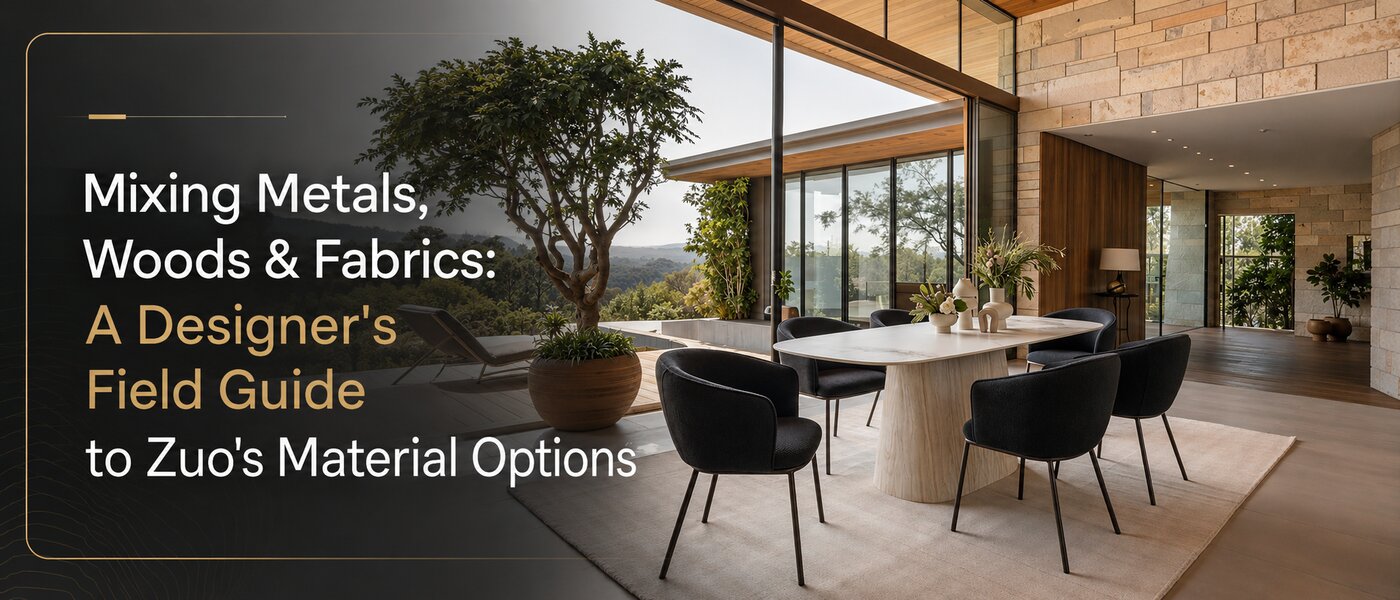
Mixing materials is where a room starts to feel intentionally designed instead of simply furnished. For interior designers, retailers, stagers, and hospitality buyers, it is also where a project can quickly lose direction. Too many undertones, too many finishes, or too many competing textures can make a space feel disconnected, even when every individual piece looks great on its own.
The goal is not to match everything perfectly. In fact, overly matched rooms can feel flat, dated, or overly “set-like.” The stronger approach is to build a material story that feels coordinated, layered, and easy to understand. Whether you are pulling multiple SKUs for a hotel lobby, model home, restaurant dining area, showroom floor, or residential project, the same rules apply: repeat with purpose, contrast with control, and let one material direction lead.
Start With Undertones, Not Labels
Material names are useful, but they do not always tell the full story. “Oak” can lean warm, neutral, or slightly gray. “Brass” can appear bright gold, muted, antique, or even greenish depending on the finish and lighting. A beige fabric may feel warm next to a cool stone-look surface, but neutral next to walnut or bronze.
Before building a room, look at undertones first. Most finishes fall into one of three directions:
Warm: yellow, red, orange, honey, camel, brass, bronze, walnut
Cool: gray, blue, silver, charcoal, blackened metal, ash tones
Neutral: soft white, cream, taupe, natural beige, balanced wood tones
Choose one primary undertone for the space, then introduce contrast sparingly. This helps the room feel layered without looking random. For example, a warm modern space might start with walnut tones and creamy upholstery, then use black metal as a grounding element.
Use Sheen to Create Hierarchy
Sheen is one of the easiest ways to make mixed materials feel intentional. Large surfaces usually work best in matte, satin, or softer finishes because they create a calm foundation. Tables, casegoods, shelving, and large seating frames should not all compete for attention.
Higher-sheen finishes are best used in smaller moments: chair legs, lighting, hardware, accent tables, or decorative details. A touch of shine can add polish, especially in hospitality, retail, or showroom settings where products need to catch the eye. The key is balance. When every surface reflects light, nothing feels special. When sheen is used selectively, it gives the room hierarchy.
Wood Mixing Without Chaos
Wood does not have to match exactly. In many spaces, a perfect match can actually feel less sophisticated than a thoughtful mix. The safest way to mix wood tones is to create a clear relationship between them.
You can mix woods by using:
A similar undertone with different depth
A similar depth with different grain
One dominant wood tone and one smaller accent wood
A neutral upholstery or metal finish to separate two wood tones
For example, a dining table in a deeper wood tone can work with lighter wood dining chairs if both finishes share warmth. A pale wood console can sit near a darker accent chair frame if a rug, fabric, or metal finish helps bridge the two.
The practical rule: repeat your base wood at least twice. A single wood finish can look accidental. A repeated wood finish starts to feel like a system.
Metal Mixing That Looks Designed
Mixing metals can be very effective, especially in modern and contemporary spaces, but it needs discipline. One of the easiest formulas is pairing one dark metal with one warm metal. Black, gunmetal, or dark steel can act as the anchor, while brass or bronze can function like jewelry.
This works especially well across lighting, dining, occasional tables, bar areas, and hospitality spaces. The darker metal gives structure. The warmer metal adds visual interest and a more elevated finish.
Keep the warm metal in smaller doses when you want a refined look. If brass appears on every leg, frame, fixture, and accent, it can overpower the room. Used selectively, it feels intentional and polished.
Fabric Mixing: Texture Is Your Best Friend
Fabric is where a space can gain softness, comfort, and personality. For B2B projects, especially hospitality, staging, and retail floors, fabric choices also need to photograph well and feel inviting in person.
Texture creates richness without requiring loud color. Smooth upholstery can be paired with a textured accent such as a woven fabric, ribbed surface, boucle-inspired texture, or performance-style upholstery depending on the product.
When mixing fabrics, avoid making every piece the “statement.” A textured lounge chair, a smoother sofa, and a clean dining chair can work beautifully together because each has a different role. If patterns are involved, keep one pattern dominant and the others quiet.
Reliable Material Recipes
Here are a few practical combinations that are easy to apply across different project types:
Warm Modern
Walnut or warm wood tones, black metal, and creamy textured upholstery. This direction works well for residential living rooms, boutique hospitality spaces, model homes, and modern retail displays.
Contemporary Glam
Stone-look surfaces, brass or bronze accents, and a deep solid fabric such as navy, emerald, charcoal, or warm taupe.
Soft Minimal
Pale wood, matte white or cream finishes, light neutral upholstery, and one dark anchor such as black, espresso, or charcoal.
Urban Contract Look
Black metal, textured neutrals, stone-look tops, and structured silhouettes.
How to Mix Across SKUs Without Looking Like a Set
When pulling multiple Zuo items across seating, dining, accents, lighting, or outdoor, the goal is cohesion, not uniformity.
Pick one repeating element and let that become the thread. It could be a metal finish, a wood tone, a fabric family, a shape language, or a color temperature. Then vary the other elements so the space feels curated.
For example, you might repeat black metal across a dining chair, accent table, and lighting piece, while varying the upholstery and tabletop material.
This is especially useful for showroom floors and hospitality projects, where buyers and specifiers need to see how pieces can work together without feeling locked into a rigid set.
Final Thought
Mixing metals, woods, and fabrics is not about following a formula perfectly. It is about creating enough repetition for the room to feel connected and enough contrast for it to feel designed.
Need help building a cohesive mixed-material story across seating, dining, accents, lighting, or outdoor? Zuo can help suggest combinations that stay consistent without feeling like matching sets.
Email us at hello@zuomod.com with any questions.
Or give us a call at 510-877-4087 (Mon–Fri: 5:00 AM–5:00 PM PT)
-
What Is the Difference Between an Interior Designer, a Specifier, and a Procurement Company?
 July 27, 2026
 -
Did AmericasMart Make the Right Decision by Splitting the Indoor and Outdoor Markets?
 July 20, 2026
 -
How to Do a Budget-Friendly Summer Trip to Las Vegas Market 2026 Without Missing the Best Buying Opportunities
 July 13, 2026
 -
Your Coffee Is Great. Your Chairs Might Be Costing You Repeat Customers
 July 6, 2026